Magic Potions Coloring Page: A Pagan Crafts Review
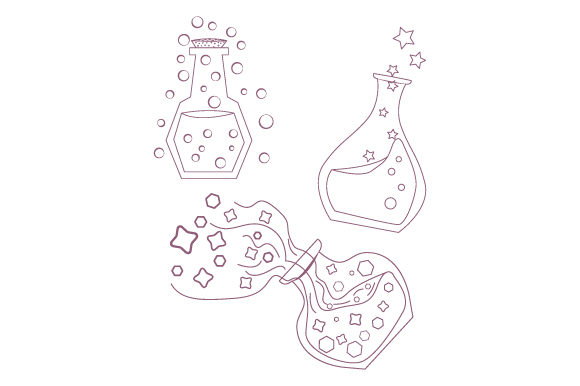
When I first downloaded the Magic Potions Coloring Page, I opened the transparent PNG immediately to see the line weight and the overall composition. This isn't a generic set of bottles; it's a carefully arranged collection of mystical flasks, tiny stars, delicate herb sprigs, and curved moon accents that feel pulled straight from a witch’s apothecary. The mood is equal parts enchanting and earthy—a little bit gothic, a little bit woodland, and entirely perfect for the pagan and witchy craft niches I serve in my own Etsy shop. Right away, I could picture it on a set of hand-printed altar cloths, a coloring book page for a seasonal coven gathering, or a row of minimalist sticker sheets for journaling witches. The style is intricate but not fussy, with a hand-drawn, almost vintage botanical illustration quality that makes the design feel like a premium graphic design asset rather than a quick clipart dump.
If you’re a maker who sells to customers drawn to the mystical, the natural, and the symbolic, this SVG design and its companion files will slot into your product lineup without effort. The Pagan category is no afterthought here—the designer has paid attention to the kinds of symbols that resonate with Wiccan, witchy, and magical communities, and that makes the asset feel intentional and usable for real handmade products.
First Glance at the Magic Potions Coloring Page – A Maker’s Eye
I’ve tested hundreds of coloring-page style illustration files, and many crumble under the weight of their own detail. This one surprised me. The line art is crisp, with consistent thickness that holds up when you zoom in. The transparent PNG opened at 300 DPI and looked sharp enough for a large print, which is the first thing I check when I’m planning to use a design for printable wall art or a sublimation design. The little crescent moons and the subtle star scatter around the bottles give the whole composition a balanced, celestial rhythm—it’s not just a row of pots, it’s a scene. That matters because it allows the file to work as a standalone art piece without needing heavy extra layout work.
The Visual Mood and Who It Attracts
The mood is playful but grounded, with a nod to folk magic. I’d describe it as decorative and slightly rustic, with a feminine, cozy edge that would appeal to buyers looking for magical self-care items, witchy home decor, or pagan seasonal gifts. Think of the customer who buys a hand-painted mug with a potion bottle and the words “Self-Love Elixir” for a friend’s Samhain present, or the planner girl who wants a spooky-cute sticker sheet for her October bullet journal. The Magic Potions Coloring Page hits that sweet spot between cute and meaningful, which is exactly what sells in my shop during the autumn and winter months.
Turning a Coloring Page into a Handmade Product Line
As a handmade business owner, I’m always looking for design assets that can stretch across multiple product categories. This file, with its clean lines and transparent background, let me build a mini collection in a single afternoon. I started with the most obvious application: printable design for a coloring page. I cleaned up the margins in a quick layout program, added a subtle border, and saved it as a high-quality PDF. That’s an instant digital product for my Etsy shop—something that pagan crafters, witchy moms, or coven leaders can download and print at home.
But I didn’t stop there. The SVG file opened smoothly in Cricut Design Space, and I used it to create a layered paper project for a handmade card. The DXF worked perfectly in Silhouette Studio for a vinyl decal that I applied to a glass jar—the kind of jar a customer would use for storing dried herbs or moon water. The PNG design with transparency became the base for a sublimation mug wrap, and I also flipped a portion of the design into a repeating pattern for a tote bag mockup. This is the hallmark of a graphic design asset that earns its place in a commercial craft library: it flexes instead of breaking.
How I’d Use It for Cricut and Silhouette Projects
For Cricut project and Silhouette project work, the key is to test the cut lines early. I imported the SVG, ungrouped everything, and checked for open paths. The file was surprisingly clean—no orphaned nodes, no double lines that would cause the blade to drag. I cut a small version in adhesive vinyl for a sticker test, and the tiny stars and bottle rims held up at about 1.5 inches. Below that, some of the delicate herb lines started to lift, so I’d recommend keeping the cut size generous for decals or permanent vinyl. For iron-on vinyl on a t-shirt, I sized the design to about 7 inches wide and it pressed beautifully onto a dark heather tee. The transparent background of the PNG meant I could also use it as a print-then-cut image for sticker sheets, and the result was crisp, with no blurry edges.
The Perfect Fit for Pagan Seasonal Collections
Because the Magic Potions Coloring Page sits inside the Pagan category, it makes sense to build seasonal collections around it. I’m already planning a Samhain bundle that pairs this design with a few other mystical clipart pieces, and I’ll use it for gift tags, spell book covers, and small altar cards. The file’s black-and-white nature means it’s also a fantastic candidate for foil quill projects, engraving blanks, or even wood burning templates. For crafters who sell at craft fair events or local pagan markets, this is the kind of asset that can become a recurring signature in your booth—printed on muslin sachets, stamped onto kraft paper boxes, or turned into a simple screen-printed patch.
Practical File Checks Every Crafter Should Do
Before you list a finished product with this design, run through the same checks I do for every commercial design I use. First, open the SVG file in your cutting software and look at the layers. Are there any hidden elements? In this case, everything was visible and labeled, which saved me time. Second, inspect the transparent PNG at actual size. The resolution was high enough for a 12x12 inch print without pixelation, which is excellent for sublimation design work. Third, test the colors. The line art is pure black, so if you’re planning to use it on a dark product, remember that the white areas will be the product color unless you add a white underbase or use a printable vinyl with white toner. I always run a test print on a cotton swatch before committing to a full mug or tumbler wrap.
SVG and DXF: Cutting Performance and Cleanup
I’ve learned the hard way that not every SVG is ready for production. This one passed my test. The lines are welded where they should be, and there are no tiny, impossible-to-weed slivers. The DXF version imported into Silhouette Studio without any scaling issues, which is a huge plus if you’re a Silhouette user. I did notice that the very fine lines on the herb leaves could be a bit delicate for a tumbler wrap that requires a lot of handling, so I’d consider thickening those just a touch in an editing program if you plan to use the design on a high-wear item. For one-off projects like custom greeting cards or framed prints, the detail is perfect as is.
PNG and Sublimation Prep: What to Watch
The PNG design is the real workhorse for print-on-demand and sublimation crafts. I took the transparent file and placed it onto a mockup of a white ceramic mug. The contrast was stunning, and the design didn’t need any color adjustment. However, because it’s a coloring page, the lines are relatively thin. For sublimation, I always recommend printing a test swatch because the ink can spread slightly on some coatings. On a hardboard coaster, the result was crisp; on a polyester tote bag, I increased the line thickness by 0.5pt in my graphics software to compensate for the fabric texture. Little adjustments like that make the difference between a product that looks homemade and one that looks like a professional Etsy product.
Where This Design Shines – and Where to Tread Carefully
This Magic Potions Coloring Page thrives in applications where the intricate line art can be appreciated. I’ve already used it for printable wall art (an 8x10 inch print sold well as part of a pagan kitchen decor set), a set of greeting cards, and a sticker design sheet for planners. It also works beautifully for handmade packaging—think belly bands, hang tags, or tissue paper stamps. The design bundles well with other mystical elements, so you can create a cohesive design bundle for your shop.
On the other hand, I’d be careful with very small-scale vinyl cutting projects. The thin lines of the stars and the tiny dots on the bottle labels can be difficult to weed if the design is shrunk below a certain threshold. For layered vinyl on a t-shirt, I’d also simplify the composition slightly, grouping some elements so you don’t end up with a dozen tiny pieces to align. The same goes for small sticker sizes—stick to at least 2 inches wide to keep the details readable. And if you’re planning to use the design on a product with a lot of color variation, like a tie-dye shirt, test it first because the line art can get lost against busy backgrounds.
Pairing with Fonts and Branding for a Cohesive Shop Look
One of the quickest ways to elevate a coloring-page asset into a finished product is to pair it with the right typography. For this Magic Potions Coloring Page, I’ve tested several combinations. A delicate script font with swooping ascenders adds a romantic, magical feel and works wonderfully for a “Potion Master” mug or a “Brewed with Love” kitchen towel. A clean sans serif font in all caps gives the design a modern apothecary look that fits minimalist branding. For a grimoire or journal cover, I used a serif font with a slightly distressed texture, and the result felt like a vintage book plate. If you’re selling in the pagan niche, pairing the line art with a handwritten font that mimics calligraphy can make the product feel deeply personal and artisanal. I always keep a few font families on hand so I can quickly mock up different product styles for my small business branding.
The Bottom Line for Handmade Business Owners
After weeks of testing this graphic design asset across mugs, shirts, tote bags, stickers, and printable products, I can say it’s a keeper. The Magic Potions Coloring Page delivers exactly what I need as a handmade business operator: a versatile, well-drawn, and spiritually resonant design that can be repurposed across a dozen crafts without looking repetitive. The inclusion of SVG, transparent PNG, EPS, and DXF formats means it’s ready for almost any workflow, and the pagan theme is authentic enough to attract a loyal customer base. I’ve already reordered a batch of sublimation mugs using this design, and I’m prepping a limited-edition sticker set for the next creative marketplace update. Whether you’re a seasoned Etsy seller, a DIY creator building a craft fair inventory, or a print-on-demand enthusiast, this file will earn its keep. Just remember to run your own tests, check the commercial license for your specific use case, and don’t be afraid to tweak a few lines for the perfect product finish. The design assets that respect your workflow are the ones that turn into real profit, and this one respects the maker’s process from start to finish.