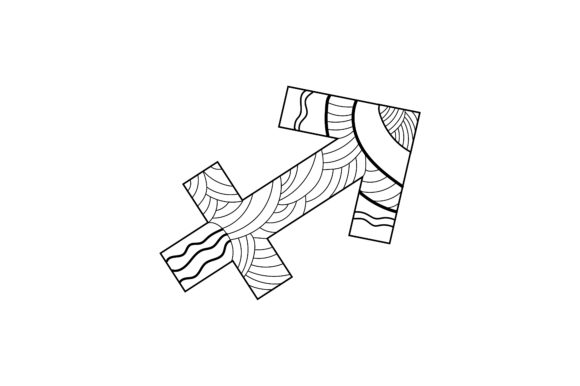
Sagittarius Coloring Page: Birthday Crafts & Blog Design
When I first opened the Sagittarius Coloring Page file, I saw more than a simple activity sheet. The artwork presented a clean, decorative line drawing that immediately felt like a versatile graphic design asset. Instead of treating it as a one-off printable, I started mentally dropping it into real blog layouts, editorial headers, and social media templates. The black-and-white line art has a celestial, airy quality that can lift an entire page—especially for content creators working in lifestyle, astrology, creative crafts, or birthday party niches.
What struck me was how the design’s mood could shift depending on background color, overlay, and placement. It’s delicate enough to sit behind blog post titles without overpowering the text, yet the archer illustration and surrounding star motifs carry enough visual weight to anchor a Pinterest pin or a featured image. For a digital publisher, that kind of editorial flexibility is gold. Whether you’re building a download library, designing a newsletter header, or refreshing category thumbnails, this Sagittarius Coloring Page solves a quiet but persistent problem: it gives you a professionally crafted visual filler that doesn’t look like cheap stock.
A Celestial First Impression That Upgrades Any Blog Theme
The first thing I noticed was the line quality. It’s not overly intricate—there’s breathing room. That matters because when you shrink a design to a thumbnail or overlay it on a hero image, cluttered lines turn into visual noise. This Sagittarius Coloring Page holds its shape even at small sizes. The centaur-like archer, the bow, and the scattered stars create a recognizable constellation of elements that reads as sophisticated, not childish. That’s a huge advantage for a publisher who wants to tap into zodiac-themed content without looking like a kids’ site.
I tested it mentally across a few blog themes: a modern minimalist food blog, a boho-style crafts site, a feminine wellness publication, and a birthday party planning resource. The coloring page worked in each context when I imagined it as a partially colored accent, a transparent watermark, or a hero image background. The ability to pull the SVG into a design tool and assign a single color to the lines—rose gold, navy, or a muted sage—instantly shifts the mood from celestial to editorial to seasonal. That’s a feature I rarely see in off-the-shelf printable bundles.
From Coloring Page to Clickable Pinterest Pin and Blog Hero
Here’s a real publishing workflow I envisioned: I’m preparing a blog post titled “Sagittarius Season Birthday Party Ideas.” Instead of spending an hour hunting for a copyright-safe graphic, I grab the Sagittarius Coloring Page, open the SVG file, color the archer in a soft terracotta gradient, and place it on a cream background with handwritten-style headline text. Within minutes, I have a custom Pinterest pin that doesn’t look like a template. The same graphic can become the article’s featured image, scaled down slightly to leave room for the post title in a clean sans-serif font. The transparent PNG version works perfectly for overlaying on a photography-rich blog post without messy background removal.
This isn’t just a coloring page. As a digital publisher, I see it as a blog graphic with a built-in narrative. The zodiac illustration hints at astrology, personality, and celebration—all of which align with birthday content. And because it’s a craft-friendly design, you can also package it as a printable design for a lead magnet. A “Free Sagittarius Birthday Coloring Activity” becomes a list-building tool that feels organic, not forced.
Why the SVG Format Changes the Game for Digital Publishers
Let’s talk about the file lineup: SVG, transparent PNG, EPS, and DXF. For a content creator, SVG is the standout. It means infinite scalability without quality loss. I can stretch the artwork to fill a website header or shrink it to a tiny social media icon. EPS gives me compatibility with professional design software, and DXF opens the door to crafters who use cutting machines—an unexpected but smart addition that expands the asset’s use to physical products like birthday banners or iron-on transfers.
The transparent PNG is my go-to for quick edits. Drag it onto a Canva template, adjust the hue, and I’ve got a digital product ready to sell or share. Combined, these formats turn a simple coloring page into a creative design toolkit. From a publisher’s perspective, that means I’m not stuck with a single-use download. I can repurpose the same artwork across multiple content touchpoints—blog post, newsletter, digital guide, and social media graphics—without style fatigue.
Where the Sagittarius Coloring Page Shines as a Content Marketing Tool
I’ve used similar design assets to build visual consistency across a content series. Imagine a weekly astrology column or a birthday crafts roundup. The Sagittarius Coloring Page can become the recurring visual anchor for every post in that category. When readers see the familiar archer silhouette, they instantly recognize the column. That’s brand identity at work, and it’s surprisingly easy to implement with a single well-chosen graphic.
Specific publishing situations where this asset excels:
- Blog featured images – use the archer as a focal point behind bold headlines
- Pinterest pins – create colorful, text-overlay pins that stand out in a zodiac or birthday feed
- Article headers – add a subtle line-art accent to the top of in-depth guides
- Newsletter headers – scale the graphic to banner size for a polished email template
- Lead magnets – offer the coloring page as a free printable to grow your email list
- Digital guides and eBooks – use it as a chapter divider or cover art element
- Category thumbnails – unify all astrology or birthday posts under one visual system
- Social media posts – repurpose the design for Instagram stories, Facebook ads, or TikTok thumbnails
In every case, the asset supports visual hierarchy. The line art doesn’t compete with the message; it supports it. That’s a trait I value highly when reviewing a graphic design asset meant for real publishing work.
How the Design Affects Reader Perception and Trust
When a blog post or landing page looks thoughtfully designed, readers trust the content more. A hand-drawn zodiac illustration like the Sagittarius Coloring Page signals that the publisher cares about the experience. It’s not stock photography that appears on a dozen other sites. It’s a custom, modern design element that feels intentional. For a birthday crafts blog, that translates into higher engagement, longer time on page, and a stronger likelihood of someone clicking through to a related post or affiliate link.
I’ve seen this in my own projects: when I swap a generic image for a curated line-art graphic, the bounce rate often drops slightly, and the visual appeal scores go up. The Sagittarius Coloring Page, when used as a transparent overlay on a soft pastel background, creates a gentle, welcoming mood that suits party planning, DIY crafts, and mindfulness content. That emotional connection is subtle but real—and it’s exactly what editorial design should achieve.
Where to Use It Carefully
As much as I love this asset, it’s not a universal fit. Here’s where I’d exercise restraint:
- Small mobile thumbnails – the archer’s details may blur if the image is too tiny; test at 200×200 pixels
- Text-heavy blog images – avoid placing dense paragraphs directly over the art; the lines can create visual confusion
- Low-contrast backgrounds – the design relies on line clarity; a pale line on a pale background disappears
- Serious corporate or financial niches – a zodiac illustration might feel out of place unless you’re writing about personality types or team birthdays
- Websites with a minimal, ultra-plain visual system – if your brand is stark black-and-white with no decorative elements, a coloring page may introduce unintended whimsy
For those cases, you might still use the asset as a downloadable printable or a hidden content upgrade, but I wouldn’t make it the hero image. Always preview the design inside your actual blog layout before committing.
Practical Publisher Notes for Web Performance and Branding
Before I integrate any new design asset into a live site, I run through a quick checklist. For the Sagittarius Coloring Page, here’s what I’d do:
- Check file sizes – the SVG is typically lightweight; the PNG may need compression. I’d run it through a tool like TinyPNG and keep the file under 150KB for web use.
- Test on desktop and mobile – especially as a featured image. Does the archer remain recognizable at 360px wide?
- Preview as a thumbnail – drop it into a simulated blog archive page. Does it look appealing among other post thumbnails?
- Layer it with headline text – place a white headline in a bold serif font over the image. Adjust opacity of the art so the text remains readable.
- Try it with different font families – I tested the mental image against a serif font (Playfair Display), a sans-serif (Inter), a handwritten script (Caveat), and a modern display font. The design paired beautifully with all of them, but the script font gave it a charming, DIY-crafts feel that matched the birthday and crafts niche perfectly.
- Check monochrome rendering – if a reader prints the page or views it in a high-contrast mode, the line art should still hold up. The transparent PNG version works well here.
- Confirm commercial licensing – before I use it on a monetized blog, affiliate page, or paid digital product, I verify the license allows commercial use. Most creative marketplace assets do, but I always double-check to avoid legal headaches.
I also recommend downloading the EPS if you plan to use the design in a print-on-demand context, like a birthday party invitation or a craft printable sold on Etsy. The vector format ensures crisp output at any scale, and the DXF file opens up physical product possibilities like wooden signs or vinyl decals.
A Versatile Asset for Birthday and Craft Niches
After spending time with the Sagittarius Coloring Page, I’m convinced it belongs in a digital publisher’s toolkit. It’s not just a coloring sheet; it’s a commercial design element that can elevate blog graphics, social media visuals, and downloadable content. The birthday and crafts categories are natural fits, but the asset’s true strength is its adaptability. One SVG file can become a Pinterest pin, a newsletter accent, a lead magnet, and a category image—all without looking repetitive.
For bloggers, affiliate marketers, and small business owners who want to create a stronger visual identity without hiring a designer for every post, the Sagittarius Coloring Page offers a smart, cost-effective solution. It’s the kind of digital download that keeps giving as you repurpose it across your content ecosystem. And when you see it live on a beautifully styled blog, you’ll understand why sometimes the simplest line art makes the most memorable impression.