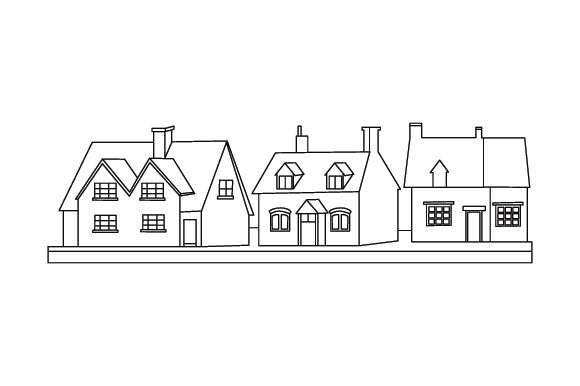
English Village Coloring Page: A Designer’s Honest Review
Every so often, a design lands on my screen that stops me mid-scroll. That happened with English Village Coloring Page. It is not trying to be loud or trendy, and that is precisely what makes it interesting. The moment I opened the file, I felt a quiet pull toward a slower, cozier kind of project. Rolling hills, clustered cottages, winding lanes, little chimneys, and soft rounded shapes give it the feel of a storybook illustration that has been waiting for the right stitch interpretation.
What struck me first was the balance between openness and detail. The layout leaves breathing room for thread to do the heavy lifting without turning into a dense, bulletproof sheet of stitches. That alone makes it a strong candidate for wearable embroidery, something I always watch for when selecting designs for client projects or my own shop merchandise. Too many designs look gorgeous on screen but become stiff and unwearable once stitched out. English Village Coloring Page feels like it was drawn with fabric in mind, even if it was originally created as a coloring page.
The mood is distinctly English countryside. Think stone cottages, meandering paths, a few scattered trees, and the kind of gentle asymmetry that makes a handmade product feel authentic rather than mass-produced. For anyone selling embroidery at craft fairs, on Etsy, or through boutique shops, this is a design that tells a story. And customers buy stories before they buy stitches.
When a Coloring Page Becomes an Embroidery Design
Translating a coloring page into machine embroidery is not always straightforward. Coloring pages rely on open spaces that a hand fills with pigment. Embroidery fills those spaces with thread, and the wrong conversion can turn a charming sketch into a heavy, puckered mess. With English Village Coloring Page, the supplied file formats — SVG, Transparent PNG, EPS, and DXF — give me what I need to assess the linework before committing to a stitch run. I opened the SVG first, and the paths were clean, well-grouped, and logically structured. That matters immensely when you need to adjust scale, remove tiny elements for small hoop sizes, or recolor sections for different fabric backgrounds.
The Transparent PNG is a bonus for creating quick mockups. I dropped it onto a photo of a natural linen tote bag and instantly saw how the design would feel against a textured, unbleached background. That combination alone — a rustic English village on raw linen — could easily become a signature product for a small shop. The EPS and DXF formats give confidence that I can scale the design without losing fidelity, which is essential for larger projects like pillow covers, wall hangings, or quilted blankets.
Where This Design Truly Belongs
Let me take you through a real scenario. Last week, I was preparing a sample batch for a client who runs a small home goods shop. She wanted a collection of embroidered kitchen towels, pillow covers, and simple canvas tote bags with a cozy, village-inspired theme. I tested several designs, and English Village Coloring Page was the one that made the final cut. Here is why.
On a flour-sack kitchen towel, stitched in a single earthy brown thread, the design looked like a vintage etching. The open areas let the fabric breathe, and the towel remained soft and absorbent instead of turning into a stiff panel. On a cotton pillow cover, I used a slightly heavier thread weight in charcoal gray, and the village scene took on a hand-drawn charcoal sketch quality that felt elevated and personal. The same design on a natural canvas tote bag, stitched in deep olive green, created a quiet, sophisticated look that would sit comfortably in a boutique window display alongside products priced at a premium.
For custom apparel, I see this working beautifully on sweatshirts, especially across the upper back or on a front pocket placement. The horizontal layout lends itself to that placement without awkward cropping. T-shirts are trickier because of the stretch factor, but with a quality cutaway stabilizer and a soft fill approach, the design can work on a relaxed-fit tee. I would avoid placing it on anything too fitted, where the embroidery would distort with body movement.
The baby embroidery and nursery decor market is another strong fit. A soft pastel thread palette on a creamy cotton blanket or a small framed hoop art piece for a nursery wall could make this design a steady seller. Parents and gift buyers gravitate toward gentle, story-rich imagery, and an English village scene fits that niche perfectly.
Thread, Fabric, and the Art of the Right Choice
One thing I learned early in my embroidery career is that the same design can look brilliant or terrible depending on thread color and fabric choice. English Village Coloring Page rewards thoughtful pairing. On light fabric, a single dark thread color creates a clean, graphic look. On medium-toned fabric, I like to use two or three shades to add depth — perhaps a darker thread for the main outlines and a slightly lighter shade for the softer background elements like trees and distant hills. The design does not require a dozen thread changes, and that keeps production time reasonable for a small business.
Dark fabric is where I urge caution. The design relies on open space and fine linework, which can get lost on deep black or navy backgrounds unless you choose a thread color with strong contrast and a bit of sheen. A bright white or metallic thread on black can work, but it shifts the mood from cozy village to something more modern and graphic. Test on a scrap of your actual fabric before committing to a full run.
Textured fabrics like terry cloth, fleece, or loosely woven linen add another layer of complexity. The detail in the cottages and trees could blur if the fabric pile is too high. I recommend a topping stabilizer for any fabric with a nap, and I would keep the design size generous enough that the details do not collapse into each other. A hoop size of at least 5x7 inches is my practical minimum for preserving the integrity of the village scene. Smaller hoops force you to shrink the design to a point where the charming details become muddy, and that defeats the purpose of choosing a design with this much character.
Stitch Density and the Wearable Test
When I evaluate any machine embroidery design, I think about how it will feel against the skin. A design that is too dense becomes uncomfortable on apparel, especially on garments worn close to the body. The open construction of English Village Coloring Page is a genuine advantage here. The linework-based approach means the stitch count stays reasonable, and the finished piece remains flexible. I would lean toward a running stitch for the main outlines and use satin stitch sparingly for occasional accents, perhaps a chimney or a window, to create a subtle dimensional contrast without adding bulk.
For embroidered patches, this design is a natural fit. The village scene has a clear boundary and a cohesive shape that works well as a standalone patch. Stabilize well, add a finished edge, and you have a product that appeals to travelers, Anglophiles, and anyone who appreciates heritage-inspired accessories. Patches sell well on Etsy, at craft fairs, and as add-on items in handmade shops.
The holiday embroidery angle is worth exploring too. Imagine this village scene stitched in cream thread on a deep red table runner, or in gold on a forest green stocking. The English countryside theme carries a nostalgic holiday warmth that does not need snowflakes or reindeer to feel festive. It is subtle enough to stay out year-round but can easily be dressed up for seasonal collections.
Practical Notes for Small Shop Owners and Etsy Sellers
If you are listing English Village Coloring Page as a finished product, photograph it on a few different backgrounds. A crisp white background shows the design clearly, but a lifestyle shot on a linen towel or a folded tote bag tells the customer what this design actually feels like in real life. I have seen too many beautiful embroidery listings fail because the product photos looked sterile and disconnected from the buyer's imagination. Let the design's warmth do the selling.
For digital product sellers offering embroidery files, this design has strong appeal in the Uk Designs category. The English countryside aesthetic is consistently popular with buyers who want heritage-inspired, understated designs that work across multiple product types. The file formats provided — SVG, Transparent PNG, EPS, and DXF — cover the main needs of digital download customers, but you should still clearly state what is included and what is not. Buyers appreciate transparency about file compatibility, and clear communication reduces refund requests.
One point I always raise with other designers is the importance of licensing. Before selling finished products or digital files, confirm the commercial terms attached to the design. The Crafts category often implies handmade use, but the specifics of commercial embroidery, print-on-demand, or mass production should be verified. Do not assume. A quick check protects your business and respects the original creator's work.
Testing Before You Trust the Design
My standard advice for any embroidery project applies doubly here. Run a test stitch on scrap fabric that matches your final product as closely as possible. Watch how the thread lays on the fabric, whether the fine details hold up, and whether the overall impression matches what you saw on the screen. Adjust thread colors if the contrast feels off. Check stitch density if the fabric puckers. Review the design in a black-and-white mockup to see if the value structure holds without color to guide the eye. These small checks take minutes but can save you from a batch of products that do not meet your standards.
I also recommend testing the design on both light and dark fabric swatches, even if you only plan to use one colorway. You might discover a combination that becomes your bestseller. Some of my most popular product variations came from happy accidents during testing.
Why This Design Earns a Place in My Library
English Village Coloring Page is not flashy, and that is its strength. It brings a quiet, storybook quality to embroidery projects that can set a handmade product apart in a crowded market. The open linework keeps the design wearable and versatile, the file formats support multiple workflows, and the subject matter has broad appeal across age groups and product categories. From kitchen towels to baby blankets, from tote bags to framed hoop art, this design adapts without losing its identity.
For embroidery designers, small business owners, and crafters who want a design that feels personal, timeless, and genuinely useful, this one is worth a serious look. Test it, pair it thoughtfully with fabric and thread, and let the English village charm do the rest.