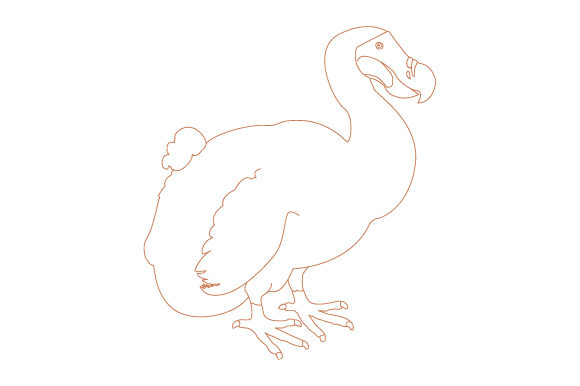
Dodo Coloring Page: A Designer’s Embroidery Review
A Quirky Line Art That Feels Like a Story
When I first opened the Dodo Coloring Page, I smiled. It’s not every day you see a dodo bird treated with such gentle charm. The line art is simple but full of personality—the curve of the beak, the slightly plump body, the soft eye. It feels like a page from a vintage children’s book, ready to be brought to life with thread. For an embroidery designer, this kind of illustration is a gift. The shapes are open, the lines are clean, and the mood is playful without being babyish. It immediately sparked ideas for nursery decor, custom kidswear, and handmade gifts that feel personal and thoughtful.
As a vector graphic, the Dodo Coloring Page arrives in SVG, PNG, EPS, and DXF formats. That means you’re not getting a stitch-ready machine embroidery file. You’re getting a crisp, scalable design asset that you can digitize yourself, adjust to your exact hoop size, and turn into an embroidery pattern that matches your creative vision. For me, that’s a plus. I’d rather have the freedom to control stitch types, density, and color mapping than be locked into someone else’s interpretation.
Why This Dodo Design Works for Children’s Items
The Kids and Crafts category makes perfect sense. The dodo is a curiosity, an extinct bird that sparks imagination. It’s not a generic cartoon animal. It’s a conversation starter. On a child’s sweatshirt, a bib, a small backpack, or a tote bag for carrying picture books, the Dodo Coloring Page becomes a little piece of whimsy. The design feels educational and artistic at the same time. I can already picture it embroidered in a soft charcoal thread on oatmeal linen, or in colorful pastel hues for a baby quilt block.
The open, coloring-book style invites creative interpretation. You could use a simple running stitch to trace the outline, creating a delicate sketchy look. Or you could fill the body with a satin stitch and leave the wing as a negative space, letting the fabric show through. That flexibility is valuable for crafters who want to sell products that don’t look mass-produced. The Dodo Coloring Page gives you a solid foundation without boxing you into a single aesthetic.
A Designer’s Morning: Turning a Coloring Page into a Tote Bag
Let me walk you through a real project scenario. A small boutique owner asked me to create a custom embroidered tote bag for a children’s gift set. The theme was “extinct friends,” and the Dodo Coloring Page was exactly what I needed. I opened the SVG file in my digitizing software, resized it to fit a 4x4 hoop, and began mapping stitches.
I decided to keep the embroidered version as close to the original line art as possible. I assigned a single-needle running stitch for the main outline, using a medium-weight cotton thread in a warm brown-black. For the eye, a tiny satin stitch dot added life. I kept the stitch density low so the fabric would remain soft—this tote needed to be washable and kid-friendly. After a test run on cotton canvas, I adjusted the tension slightly and added a light tear-away stabilizer. The result was a crisp, airy embroidery that looked hand-drawn. The boutique owner loved it, and the tote sold out quickly at a craft fair.
That’s the magic of a well-drawn coloring page. It doesn’t fight you. It cooperates with the fabric and the thread, and the final product feels intentional and high-quality.
Where the Dodo Design Shines Brightest
After testing the Dodo Coloring Page on several materials, I’ve pinpointed the projects where it truly excels:
- Custom apparel for kids: small sweatshirt chest logos, back yokes on denim jackets, and playful knee patches.
- Tote bags and pouches: the design’s scale works beautifully on canvas, linen, or cotton drill.
- Nursery decor: framed hoop art, cushion covers, and soft fabric book panels.
- Baby embroidery: bibs, onesies, and muslin blankets where a gentle line art touch is soothing.
- Personalized gifts: add a name or date under the dodo to create a keepsake for a birthday or baby shower.
- Craft business merchandise: the design is distinctive enough to build a mini-collection of bird-themed products.
The Dodo Coloring Page also works well as a printable mockup for digital product sellers. You can use the transparent PNG to create realistic embroidery previews for Etsy listings, helping buyers visualize the finished product without stitching a single sample.
Fabric and Hoop Considerations: What to Test Before You Commit
With any line art embroidery, small details matter. The dodo’s beak tip, the tiny claws, and the feather lines on the wing need to be clear. I always test the design on scrap fabric first, especially when moving from a digital file to a stitch file. Here’s what I check:
- Hoop size: measure your digitized version. The SVG can be scaled, but you need to know your minimum and maximum hoop capabilities. A 4x4 hoop works for most small projects, but if you want a larger statement piece, plan accordingly.
- Fabric texture: tightly woven fabrics like poplin, quilting cotton, or canvas hold the stitch definition best. Avoid heavily textured fabrics like fleece or terry cloth unless you’re confident the running stitch will still read clearly.
- Stretchy fabrics: on knits, use a cut-away stabilizer and consider a very light stitch density to prevent puckering. I’d reduce the stitch count on the outline and avoid any dense fill unless the design is simplified.
- Dark fabric: the Dodo Coloring Page relies on outline contrast. On dark backgrounds, a light thread (cream, mint, or soft yellow) can make the dodo pop, but test for thread coverage. You might need to double the outline or use a slightly thicker thread.
- Curved surfaces: hats and caps are tricky. The dodo’s shape is forgiving, but the beak’s pointed tip could distort on a curved cap front. I’d reserve this design for flat or gently curved areas.
Another tip: check the design in a black-and-white mockup to see if the silhouette holds up. The Dodo Coloring Page has a strong, recognizable outline, which is a huge advantage for embroidery. Even without color, it reads as a dodo. That’s important for customer recognition and brand consistency.
Thread Choices That Elevate the Design
The beauty of a coloring page design is that you’re not locked into a single color palette. I’ve stitched the Dodo Coloring Page in monochrome for a minimalist look, and in two-tone combinations for a playful feel. Here are some thread scenarios that worked well in my tests:
- Classic vintage: walnut brown on cream fabric, like an old naturalist’s sketch.
- Nursery pastel: mint green outline on soft white, paired with pale peach fill for the beak.
- Bold modern: bright coral or teal on a dark gray tote, giving it a pop-art vibe.
- Metallic accent: a subtle gold running stitch for the eye and wing details on a holiday ornament or keepsake patch.
Whatever you choose, confirm the thread color contrast in natural light. What looks crisp on screen can disappear on fabric. I always stitch a small sample patch before starting a large project.
The Commercial Angle: Selling Finished Products with Confidence
If you’re an Etsy seller, craft fair vendor, or small shop owner, the Dodo Coloring Page can become a reliable product asset. The design has a unique, non-generic appeal that sets your items apart. Customers are drawn to extinct animals, and a dodo is both cute and a little sophisticated. It appeals to parents who want something beyond the typical cat or dinosaur embroidery.
However, you must do your licensing homework. The product description states you receive the design in SVG, PNG, EPS, and DXF formats. That doesn’t automatically grant you the right to sell finished embroidered products commercially. Check the designer’s license terms. Can you use it on items for sale? Is there a limit on quantity? Do you need to credit the designer? These questions are crucial for your business. I always keep a copy of the license agreement in my project folder, especially when using a design in multiple listings.
For digital product sellers, the transparent PNG is excellent for creating mockup previews. You can layer it over a photo of a blank tote or sweatshirt to show how the embroidery would look. Just be clear in your listing that the item is a mockup, not a physical product, if you’re selling the digital file itself.
Practical Embroidery Designer Notes
Before you jump into production, here’s a quick checklist that I run through with every new design, including the Dodo Coloring Page:
- Digitize thoughtfully: avoid converting the entire SVG into a single dense fill. Break the design into logical sections—outline, eye, beak, wing details—and assign appropriate stitch types.
- Test on the actual fabric: flannel, denim, and stretchy knit all behave differently. Don’t assume your first digitized version will work on all materials.
- Watch the stitch density: line art naturally calls for running stitches, but if you choose to fill areas, keep the density moderate. Too heavy, and the fabric will feel stiff and uncomfortable on clothing.
- Stabilizer is your friend: for most woven fabrics, a medium-weight tear-away is sufficient. For knits or delicate fabrics, a cut-away or water-soluble topper will protect the stitching.
- Check small details: the dodo’s claws and beak tip are tiny. If your stitch file makes them too small, they might become a blob. Enlarge them slightly or simplify if needed.
- Consider the end use: a baby bib will be washed frequently. Use polyester thread that won’t shrink or bleed, and cover the back with soft backing to prevent irritation.
The Dodo Coloring Page has been a joy to work with across multiple projects. It’s a reminder that embroidery doesn’t have to be complex to be beautiful. A well-drawn line, a thoughtful thread choice, and a little testing can turn a simple coloring page into a heirloom-quality piece. Whether you’re stitching a single gift for a friend or building a product line for your craft business, this design deserves a spot in your digital library.