Tour Eiffel Coloring Page
First Glance: The Charm of a Hand-Drawn Landmark
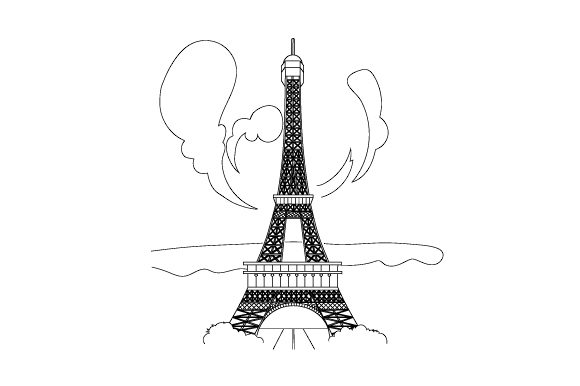
When I opened the Tour Eiffel Coloring Page file, I immediately felt a soft, storybook quality that is surprisingly hard to find in ready-made design assets. The Eiffel Tower is drawn with a light, slightly whimsical line that feels more like a child’s sketchbook illustration than a rigid architectural blueprint. There is a gentle asymmetry to the ironwork arches, a subtle playfulness in the curved summit, and an overall openness that invites you to fill the space with your own color choices. For an embroidery designer, this kind of line art is a gift. It reads as a clean, single-color outline that can be translated into a crisp running stitch, a delicate satin stitch, or even a bold redwork motif without losing its personality. The mood is undeniably Parisian but filtered through a lens of nostalgia and innocence—exactly the kind of visual that makes handmade baby gifts, nursery decor, or boutique apparel feel instantly special.
Stitching It Out: A Practical Test on Baby Apparel
I decided to test the design on a real project that many small shop owners face: a custom order for organic cotton baby onesies. The client wanted a “tiny Parisian” theme for a baby shower gift set, and the Tour Eiffel Coloring Page seemed like a perfect fit. I imported the SVG file into my embroidery software, traced the lines with a single-thread running stitch, and set my hoop to a manageable 4x4 inches. On a scrap of interlock knit, the outline stitched out cleanly, with no pulling or distortion. The open center of the tower let the fabric breathe, avoiding the stiffness that denser fill stitches can create on delicate baby clothes. I used a soft charcoal thread on a heather gray onesie, and the result was a hand-drawn sketch effect that looked effortlessly elegant. One thing I learned quickly: a lightweight tear-away stabilizer is non-negotiable on knits. Without it, the fine lines can shift. A quick press with a pressing cloth afterward flattened the stitches beautifully, and the design held up through a gentle wash cycle without any thread breaks.
Nursery Decor and Soft Goods
This is where the Tour Eiffel Coloring Page truly shines. The organic, line-drawn quality makes it a natural for pillow covers, crib sheets, muslin blankets, and soft wall hangings. Because the design is essentially an outline, it works wonderfully on textured fabrics like linen or waffle cotton, where heavy fills would sink and lose definition. I’ve already planned a series of nursery pillowcases with this design stitched in a single hue of dusty rose or pale gold, paired with the baby’s name in a simple typeface. The finished product reads as a luxury handmade gift, the kind customers are willing to pay a premium for on Etsy or at a craft fair.
Custom Apparel for Little Ones
Kids’ clothing is an obvious category, and the design’s classification under Kids and Crafts makes perfect sense. On a tiny sweatshirt, a chest-left placement of the tower feels playful and unpretentious. I’ve also seen it used as a repeating pattern on toddler leggings, though that requires careful digitizing to avoid puckering. The key is to keep the stitch density low and the design slightly enlarged—too small, and the delicate latticework risks becoming a blur. For a large back placement on a sweatshirt or a denim jacket, the line art can be scaled up and switched to a thicker satin stitch for bolder visibility. In all cases, the design’s simplicity keeps the garment comfortable and washable, which is crucial for parents.
Boutique Totes and Market Bags
One of my favorite uses for this design is on a natural canvas tote. The raw, sketch-like outline against the coarse weave of the canvas creates a beautiful contrast. I recently stitched it in a muted navy thread on a cream tote, paired with a subtle lavender sprig design, and the bag sold within hours at a local market. The Tour Eiffel Coloring Page gives the tote a hand-illustrated feel that mass-produced prints simply cannot replicate. It also works well on a small, flat patch that can be sewn onto denim jackets or backpacks—a versatile product that many craft business owners overlook.
File Formats and Digitizing Requirements
You receive the Tour Eiffel Coloring Page in SVG, transparent PNG, EPS, and DXF formats. That is important to understand: these are not stitch-ready embroidery files. They are design assets that you must digitize yourself or use as a template for applique or printing. The SVG file, in particular, is a dream to work with in embroidery software because it imports as clean vector paths that can be converted directly into stitch objects. The transparent PNG is equally useful for printable mockups, presentation sheets, or as a placement guide. If you are new to digitizing, this design is a forgiving starting point because the lines are mostly continuous and free of tiny, isolated details that clog up a stitch file.
Managing Scale and Detail
When you shrink the design to fit a tiny hoop—say, for a baby cap or a cuff detail—pay close attention to the narrowest lines. The lattice of the tower’s legs and the archways can become very fine. In a 2-inch hoop, some of those details may need to be simplified manually. I recommend test-stitching at several sizes to find the sweet spot. For most projects, a 3.5-inch or larger version preserves the charm without sacrificing stitch clarity. If you plan to use the design as a machine embroidery design on a curved surface like a cap, remember that the tower’s tall, vertical shape can warp slightly. A slight rotation or a curved baseline adjustment in your software can help the design follow the cap’s contour naturally.
Stabilizer and Fabric Pairings
Fabric choice dramatically affects the final look. On smooth, high-thread-count cotton, the outline stitches sit neatly on top, but on a plush fleece or a nubby linen, the thread can sink in. In those cases, I use a water-soluble topper to keep the lines crisp. For stretchy fabrics, a cut-away stabilizer gives long-term stability—especially important if you are selling finished products. The Tour Eiffel Coloring Page is light enough that it rarely causes puckering on stable wovens, but always test on a scrap of the exact fabric you plan to use. A quick test stitch reveals whether you need to adjust thread tension or add a second layer of backing.
The Creative Edge: Coloring, Personalization, and Customer Appeal
What sets this design apart from a typical embroidery motif is that it’s a coloring page at heart. The open interior spaces invite personalization. I’ve seen customers use fabric markers to let children color the tower after it’s been stitched on a pillowcase—a beautiful interactive gift. As an embroiderer, you can fill sections with small, textured fill stitches, or even layer an applique fabric inside the tower outline for a mixed-media effect. The design’s adaptability makes it a strong candidate for handmade product listings that emphasize customization. A buyer looking for a personalized gift will appreciate that you can add a name, a date, or a tiny heart inside the outline. This kind of flexibility builds customer trust and repeat business.
Licensing Caveats
Before you use the Tour Eiffel Coloring Page on items you sell, you must check the license terms that came with the download. The product description does not specify commercial use rights, so you should assume that personal use is allowed, but selling finished products or digital embroidery files derived from the design may require an extended license. As always, I recommend contacting the designer directly if the terms are unclear. This is a crucial step for any Etsy seller or small shop product owner who wants to avoid legal trouble.
The Power of a Printable Mockup
The transparent PNG file included in the download is a valuable asset for digital embroidery file sellers and craft business owners. You can layer it over a photo of a blank tote or a baby onesie to create a printable mockup that shows customers exactly what the stitched product will look like. I use these mockups in my Etsy listings, and they consistently increase buyer engagement because the design looks tangible and professional. The PNG also works as a placement guide if you are using the design for screen printing or heat-transfer vinyl, making this a versatile design asset well beyond embroidery.
Final Thoughts on Tour Eiffel Coloring Page
As a designer who reviews dozens of embroidery-focused files each month, I find the Tour Eiffel Coloring Page to be a quietly versatile addition to a creative library. It won’t overwhelm a project with dense stitches, and it doesn’t lean on trend-chasing gimmicks. Instead, it offers a timeless, hand-drawn silhouette that works across nursery items, children’s apparel, home textiles, and boutique accessories. The line art format encourages you to think beyond the stitch—to consider coloring, fabric fills, and personalization as part of the product’s appeal. For embroidery projects that need a touch of Parisian charm without the weight of a heavy fill, this design is well worth test-stitching. Just remember to digitize thoughtfully, respect the license, and always run a sample on your intended fabric. The result, in my experience, is a finished product that feels warm, handmade, and genuinely special.