French Man on Bicycle with Baguette Coloring Page
When I first opened the folder for this design, I wasn’t staring at a pre-digitized embroidery file. I was looking at a crisp, clean line-art illustration with a personality that felt instantly familiar. The French Man on Bicycle with Baguette Coloring Page arrives as a set of versatile design assets — SVG, transparent PNG, EPS, and DXF — and it’s clear from the start that this is a creative springboard, not a finished stitch file. As someone who digitizes my own embroidery designs and constantly tests how a motif holds up under thread, I immediately started thinking about which projects would let this little character really sing.
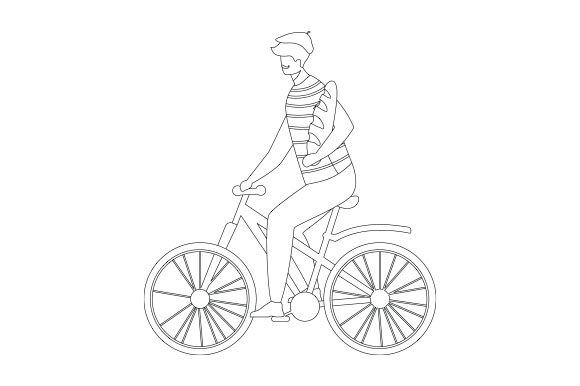
The illustration itself is playful and unpretentious. A man in a cap pedals a vintage bicycle, a long baguette tucked under his arm or balanced across the handlebars. The lines are simple enough to be approachable but detailed enough to carry a sense of motion and charm. It’s the kind of image that makes you smile, and when you’re building handmade products for a craft business, that emotional hook is everything. It doesn’t scream “kids only” despite being listed under the Kids category; the French bistro vibe works beautifully for kitchen textiles, boutique totes, and even subtle adult apparel.
What You Actually Get in the File Package
Before you load anything onto your embroidery machine, you need to understand what’s included. The design comes in four formats: SVG, transparent PNG, EPS, and DXF. The SVG and EPS files are gold for digitizers. I imported the SVG directly into my embroidery software, and the clean vector paths translated into smooth stitch lines with almost no node cleanup. The transparent PNG is perfect for creating printable mockups or previewing how the design will look on different fabric backgrounds before you commit to a stitch-out. The DXF file opens up possibilities for cutting-machine users who might want to create an appliqué base or a stencil for fabric painting — a nice bonus if you’re blending crafts.
However, this is not a machine embroidery design in the traditional sense. There’s no .PES, .DST, or .JEF file here. You’ll need to digitize the artwork yourself or work with a professional digitizer to turn it into a stitch-ready embroidery file. That’s not a weakness; it’s a creative opportunity. You get full control over stitch types, density, and color stops, which means you can adapt the design to anything from a delicate running stitch outline to a bold satin stitch patch.
First Impressions: A Line Drawing That Tells a Story
From a designer’s perspective, the composition is surprisingly balanced. The bicycle wheels create two natural focal points, the man’s posture suggests movement, and the baguette acts as a strong horizontal accent that keeps the whole layout from feeling too vertical. This matters when you’re planning an embroidery project because the eye needs to travel across the design without getting stuck. The mood is whimsical but not cartoonish. I could see this on a linen tea towel, and it would look like a vintage travel poster. On a sweatshirt, it would feel like a quirky streetwear detail. The beauty of a coloring page style is that the line art can stand alone as an outline stitch, or you can fill it in with thread painting or even fabric markers after stitching — a hybrid technique that’s gaining traction with Etsy sellers who want to offer something interactive.
Real Stitch-Out Thinking: A Custom Tea Towel Scenario
I’m currently preparing a batch of personalized wedding gifts for a couple who spent their honeymoon cycling through Provence. The French Man on Bicycle with Baguette Coloring Page immediately became the hero motif for a set of flour-sack kitchen towels. I digitized the design as a single-color running stitch outline, sized it to fit comfortably within a 4x4 hoop, and added the couple’s names in a simple typewriter font beneath the wheels. The most important step was testing it on a scrap of the same loose-weave linen I’d use for the final product. The thin lines of the bicycle spokes and the baguette’s curve needed a stabilizer that wouldn’t let the fabric push and distort the stitch path. A medium-weight cutaway stabilizer solved that, and the result was a delicate, almost hand-drawn look that felt intentional and elegant.
That kind of real-world testing is where a design like this proves its value. The artwork is not overly complex, so the digitizing time was manageable, and the file’s clean lines meant I didn’t waste hours fixing stray nodes. If you’re an embroidery designer selling finished products or digital embroidery files, the efficiency of a well-built vector asset can’t be overstated.
Where This Design Shines in Small Business Products
I can picture this motif working on at least a dozen different handmade items without ever feeling out of place. Here are some of the most natural applications:
- Kitchen towels and aprons — The French theme and food-related baguette make it an obvious choice for culinary gifts. Keep the stitching simple, maybe a charcoal thread on natural linen, and it looks like a high-end boutique find.
- Tote bags — A medium-sized version on the front of a canvas tote turns into a reusable market bag that feels like a little piece of Paris. Pair it with a stripe or a subtle flour de lis accent.
- Unisex sweatshirts and t-shirts — Place the design on the left chest or across the back yoke. Using a soft fill stitch for the man’s silhouette adds depth, while the baguette stays outlined for contrast.
- Baby onesies and children’s tees — The playful nature of the drawing fits the Kids category perfectly. A bright thread color on a soft pastel background makes it an adorable baby shower gift. Just be mindful of the small details on tiny garments; reduce the design size carefully and test stitch density.
- Embroidered patches — Digitize the design with a merrowed edge and you’ve got a sew-on patch that backpackers, foodies, and Francophiles would snap up. Iron-on backing adds another layer of appeal for craft fair products.
- Pillow covers and nursery decor — A larger version stitched in a muted palette on a cotton-linen blend pillow cover brings a subtle European flair to a reading nook or child’s room.
Points to Watch Before You Press Start
No design is perfect for every fabric and every hoop, and this one comes with a few friendly cautions. The bicycle spokes, the man’s facial features, and the baguette’s textured crust are all areas where stitch density can quickly become a problem. If you’re working on a textured fabric like terry cloth or a loose knit, the fine lines might sink in and lose definition. I’d recommend using a water-soluble topper on top of the fabric to keep the stitches sitting on the surface. For stretchy fabrics, a fusible stabilizer is essential to prevent the outline from distorting.
Small hoop sizes can be tricky. While the design scales down nicely as a vector, at under 3 inches wide the bicycle spokes may start to look messy with a standard 40-weight thread. If you’re committed to a tiny version, consider switching to a 60-weight thread and a fine needle, or simplify the spoke area into a few main lines to keep the design readable. Dark fabric is another consideration — a light-colored thread can work, but the line-art nature of the piece means you’ll lose the contrast if you use a dark thread on a dark background. Test it on both black and white fabric mockups before you finalize the thread colors.
Also, curved surfaces like caps present a challenge. The design’s horizontal layout, with the bicycle spanning left to right, may not bend gracefully around the front of a structured cap. If you’re determined to use it on a hat, consider breaking the design into a stacked composition or using just the bicycle and baguette as a separate motif.
Digitizing Decisions That Make or Break the Outcome
Because I’m evaluating this as a design asset for machine embroidery, I want to share a few digitizing notes that I found essential. The artwork is primarily a line drawing, so the most natural stitch type is a running stitch or a narrow satin stitch. I opted for a running stitch with a triple stitch for the main outlines; it gave the piece a continuous, hand-illustrated feel without becoming too delicate. You could also use a bean stitch or a backstitch style for a bolder line. If you want to add color, a fill stitch on the man’s clothing or the baguette can be added easily, but I’d keep the fill areas broad and avoid tiny satin columns that might pucker.
Stitch density is your friend, but don’t overdo it. The original coloring page aesthetic invites a light touch. I kept the stitch length around 2.5 mm for the outline, and the result was crisp on woven cotton. On a knit, I shortened the stitch slightly to prevent loops from pulling. Thread color choice is almost absurdly flexible: a single color like navy, red, or black feels classic, while a variegated thread can add an artsy, hand-dyed effect that turns the design into a statement piece.
Commercial Use and Licensing: Check Before You Sell
When you’re running a small shop or building an Etsy product line, licensing is not something you can afford to guess about. The product description doesn’t explicitly state the commercial license terms, so I strongly recommend reaching out to the seller or reviewing the included documentation before you sell finished items featuring the French Man on Bicycle with Baguette Coloring Page. The file types provided (SVG, EPS, DXF) are commonly used for both personal and commercial craft projects, but every designer sets their own rules. Some may allow unlimited physical product sales, while others may limit the number of units or require attribution. It’s your responsibility to confirm. If you’re digitizing and selling the embroidery file itself, you’ll almost certainly need a different license, so don’t assume blanket permission.
How the Design Elevates Product Value and Customer Trust
When a handmade product features a design that feels curated and thoughtful, it tells the buyer that the maker cares about more than just slapping a graphic onto a blank. The French bicycle motif carries a sense of nostalgia and humor that invites conversation. I’ve noticed that customers react to designs that have a story, and this one — a man on a bike with a baguette — is instantly recognizable and uplifting. It works as a personalized gift because it doesn’t feel generic; it has a specific personality that aligns with travel lovers, food enthusiasts, and anyone who appreciates European charm. That emotional connection increases the perceived value of a finished product, whether it’s a $12 tea towel or a $45 embroidered sweatshirt.
For digital product sellers, the transparent PNG alone is a great asset for creating printable mockups that show your embroidery work in a professional light. You can overlay the design on product photos, build cohesive branding, and give wholesale buyers a clear preview of what the final stitch will look like. That presentation edge builds trust and can set your small shop apart in a crowded marketplace.
Final Thoughts Before You Stitch
The French Man on Bicycle with Baguette Coloring Page is a delightful design asset that opens up a wide range of embroidery projects, but it’s not a grab-and-go file. It’s a starting point for someone who enjoys the digitizing process or wants to collaborate with a digitizer to create something truly custom. The illustration holds up well at medium sizes, offers lovely line work, and translates into a finished product that feels both handmade and professional. I’ve already used it for tea towels and a canvas tote, and each time the reaction has been a grin and a comment about the baguette. For a craft business focused on kitchen textiles, boutique accessories, or personalized gifts with a French twist, this is a strong addition to your design library. Just remember to test, stabilize, and respect the line art’s simplicity — that’s where the magic lives.